8 min read
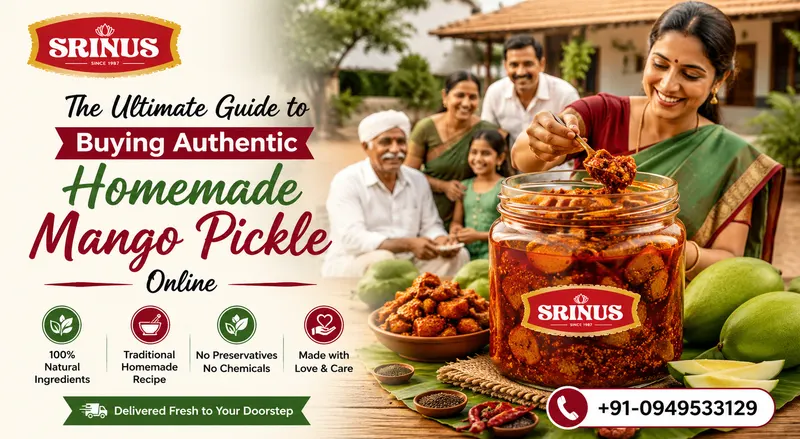
The Ultimate Guide to Buying Authentic Homemade Mango Pickle Online
By Srinus Admin
The blazing summer sun brings a wave of nostalgia for anyone who grew up in South India. It is the season when balconies turn into vibrant patchworks of drying spices, and large ceramic jars (jaadils) overflow with freshly pressed mustard oil, fiery red chilies, and raw, tangy mango pieces. For those living away from home or caught in the relentless hustle of modern city life, recreating that magic is tough. Fortunately, the digital era bridges this gap, making it incredibly easy to re-experience childhood memories when you look for premium homemade pickles online Telangana vendors who preserve traditional family recipes.
Authentic pickle making is not just a culinary process; it is a meticulously timed art passed down through generations. From selecting the perfect fibrous Avakaya mangoes to balancing the spice ratios, every single step requires patience and love. Let us explore why buying your favorite summer staple online is changing the game and how you can get the best jars delivered straight to your doorstep.
The Nostalgia and Art of Traditional Mango Pickles
In Indian households, a meal is never truly complete without a sharp, tangy kick on the side of the plate. Whether it is a comforting bowl of curd rice or a hot, ghee-laden paratha, a dollop of traditional pickle elevates the simplest food into a feast. However, finding that exact homemade taste in mass-produced, preservative-heavy supermarket jars is nearly impossible. Commercial brands prioritize shelf-life over soul, stripping away the authentic textures and punchy aromas.
The regional variations across South India are vast and fascinating. Andhra and Telangana style pickles are globally famous for their fiery heat, deep red color, and bold use of garlic and fenugreek. When you choose to buy from specialized portals, you are supporting local culinary artisans who small-batch brew these delicacies without artificial colors or chemical stabilizers.
The Versatile Variants of Homemade Mango Pickles
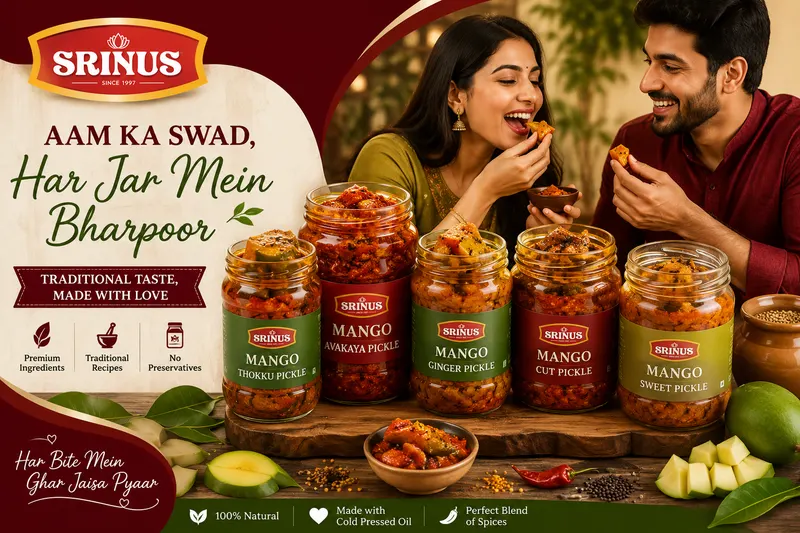
Not all mango pickles are created equal. Depending on the spices used, the cutting technique, and the base sweetener, the taste profile shifts dramatically. Here are the most sought-after authentic variants you can find online today.
-
Classic Spicy Mango Pickle (Avakaya): The undisputed king of South Indian pickles. It features large, hard-cut raw mango pieces with the inner shell intact, marinated in a heavy mixture of mustard powder, salt, and unrefined oil. If you want the pure, unfiltered traditional taste, you can safely buy pickles online Telangana options that focus on this classic recipe.
-
Mango Garlic Pickle: For those who love an extra layer of savory depth, this variant mixes pungent, peeled garlic cloves with tangy mango chunks. The garlic cloves absorb the sour mango juice and chili oil over time, turning into soft, flavor-packed flavor bombs. You can experience this brilliant combination by ordering a fresh jar of Mango garlic pickle online delivery directly to your home.
-
Sweet and Sour Mango Jaggery Pickle: If you prefer a balanced flavor profile rather than pure heat, the jaggery-infused variant is your best bet. It combines the sharpness of raw mango with the organic sweetness of melted jaggery, creating a sticky, dark glaze that pairs beautifully with puris, rotis, and mathris. This sweet-savory balance makes Mango jaggery pickle a massive hit among kids and adults alike.
-
Grated Mango Pickle (Thokku): Perfect for quick spreading, this version uses finely shredded or grated raw mango instead of large chunks. It cooks down into a jam-like savory consistency with mustard seeds and curry leaves. Grated Mango grated tokku is highly convenient for office lunchboxes, travel, and quick sandwiches.
-
Mango Murabba: Moving away from heavy spices, this is a traditional sweet preserve where thick mango slices are gently simmered in a cardamom and saffron-infused sugar syrup. A spoonful of authentic Mango murraba acts as a beautiful dessert-like accompaniment to your daily meals.
Why Sourcing Andhra and Telugu Pickles Online is Booming
The culinary landscape of Andhra Pradesh and Telangana is celebrated for its unapologetic boldness. The distinct heat comes from premium Guntur chilies combined with high-quality cold-pressed gingelly (sesame) oil. Getting this balance right requires immense skill.
[Raw Mango Selection] ➔ [Precise Sun-Drying] ➔ [Hand-Pounding Spices] ➔ [Small-Batch Mixing] ➔ [Natural Curing in Jars]For diaspora communities and urban families, finding these specific regional specialties used to involve waiting for a relative to visit from the village. Today, a few clicks open up a world of culinary heritage. If you miss the legendary spice levels of coastal Andhra, you can easily opt for an Andhra pickles buy online service that delivers the exact regional flavor profile without watering down the authentic recipe.
Similarly, residents of major cities do not have to compromise on quality anymore. You can conveniently arrange a fast mango pickle delivery Hyderabad drop-off to restock your pantry within 24 to 48 hours, ensuring you never run out of your favorite side dish.
How to Identify Genuine Homemade Pickles Online
Because the online marketplace is vast, differentiating between a genuinely homemade product and a commercially packaged factory product disguised as "home-cooked" requires an observant eye. Keep these critical quality checks in mind before hitting the buy button:
-
The Oil Layer: Authentic Indian pickles require a generous layer of floating oil at the top of the jar. This is not grease—it is a completely natural barrier that prevents air contact and mold growth. If a pickle looks overly dry or chalky, it likely contains chemical preservatives instead of traditional oil curing.
-
Ingredient Transparency: Check the back label or product description. A true artisan brand will list simple, recognizable kitchen ingredients like raw mango, cold-pressed sesame oil, mustard powder, turmeric, fenugreek, and sea salt. Avoid brands that list words like "sodium benzoate," "acidity regulators," or "artificial colorants."
-
Texture of the Mango Skin: In a well-made pickle, the skin of the mango pieces should retain a slight, firm crunch even after months of soaking. If the pieces feel completely mushy, disintegrated, or slimy, the mangoes were either over-exposed to moisture or processed improperly using automated machinery.
-
Color Maturation: Freshly made Avakaya has a bright, vibrant red hue. As it matures naturally over weeks, the color deepens into a rich, dark maroon or brownish-red. This color transition is a healthy sign of natural fermentation and spice absorption.
By keeping these parameters in mind, finding authentic Mango Pickles in Telangana platforms becomes a stress-free process that ensures great taste and stellar gut health.
The Health Benefits of Traditionally Cured Pickles
When consumed in moderation, traditional pickles are excellent for your well-being. Because they undergo a completely natural curing process without boiling, they retain the raw nutritional value of the ingredients.
-
Rich Source of Antioxidants: Raw mangoes are packed with Vitamin C, Vitamin A, and Vitamin K. These essential nutrients boost immunity and improve skin health.
-
Improves Digestion: The combination of fenugreek seeds, mustard powder, and asafoetida (hing) acts as a powerful digestive aid. It stimulates gastric juices and eases bloating after a heavy meal.
-
Probiotic Properties: Natural fermentation encourages the growth of gut-friendly bacteria. These microbes optimize your gut microbiome, improving nutrient absorption and overall metabolic rate.
-
Electrolyte Balance: The sodium content in pickles helps maintain standard fluid levels in the body, which is highly beneficial during exhausting, dehydrating summer months.
Preservation Tips to Make Your Online Jars Last Longer
Once your premium package arrives through a reliable Telugu pickles online delivery network, taking proper care of the jar will keep the contents fresh for over a year.
-
Always Use a Bone-Dry Spoon: Moisture is the ultimate enemy of pickles. A single drop of water from a wet spoon can trigger rapid fungal growth within days. Always use a clean, completely dry stainless steel or wooden spoon.
-
Keep the Components Submerged: If you notice that the top layer of mango pieces is exposed to air, use a clean spoon to press them down, or gently pour a couple of tablespoons of warm, cooled mustard or sesame oil into the jar to reset the protective layer.
-
Store in Glass or Ceramic: Avoid leaving your pickles in plastic containers for extended periods. The high acidity of the mango and salt can react with plastic over time. Transfer the contents to a sterile glass jar or a traditional ceramic container.
-
Store in a Cool, Dark Place: Keep the jar away from direct sunlight and damp kitchen corners. A cool, dry pantry is the perfect environment for slow, natural maturation.
Convenient Online Ordering for Urban Homes
Long commutes and tight professional schedules leave very little time for intensive kitchen projects like pickle making. Recognizing this need, modern logistics and localized delivery systems ensure that old-school flavors are just a click away.
Whether you want to surprise your parents or restock your own kitchen, you can seamlessly order pickles online Hyderabad services that guarantee pristine packaging and spill-proof delivery. The jars are carefully vacuum-sealed and bubble-wrapped to prevent any oil leakage during transit, bringing the authentic taste of rural kitchens straight to your urban dining table.
Frequently Asked Questions (FAQs)
Q1: How long do homemade mango pickles last without artificial preservatives?
A: A traditionally made mango pickle can easily last for 12 to 18 months without a single drop of chemical preservatives. The combination of high-quality salt, chili powder, and a thick top layer of oil acts as a complete, natural preservative that prevents any bacterial contamination.
Q2: Why is sesame or mustard oil preferred for these traditional recipes?
A: Cold-pressed sesame (gingelly) oil is the traditional choice in South India because of its high smoking point, pleasant nutty aroma, and natural preservative qualities. In North and East India, mustard oil is preferred for its sharp, pungent kick. Both oils create an inhospitable environment for harmful microbes.
Q3: My pickle has a slight white layer at the top. Is it spoiled?
A: If it is a thin, filmy white layer without a fuzzy structure or foul smell, it is usually Kahm yeast, which is a harmless byproduct of natural fermentation. However, if the layer is fuzzy, green, black, or smells distinctly rotten, it is mold caused by moisture exposure, and the contents should be discarded immediately.
Q4: Can people with high blood pressure consume homemade pickles?
A: Since traditional pickles contain a relatively high amount of salt for preservation, individuals tracking their sodium intake or dealing with hypertension should consume them in strict moderation—ideally limiting themselves to half a teaspoon per meal as a flavor enhancer.
Q5: Are the mango pieces in online pickles soft or crunchy?
A: Premium artisan brands use strictly selected, hard, fibrous raw mangoes cut with the inner kernel shell intact. This meticulous sourcing ensures that the mango pieces maintain a delightful, firm crunch even after months of soaking in the aromatic spice oil.